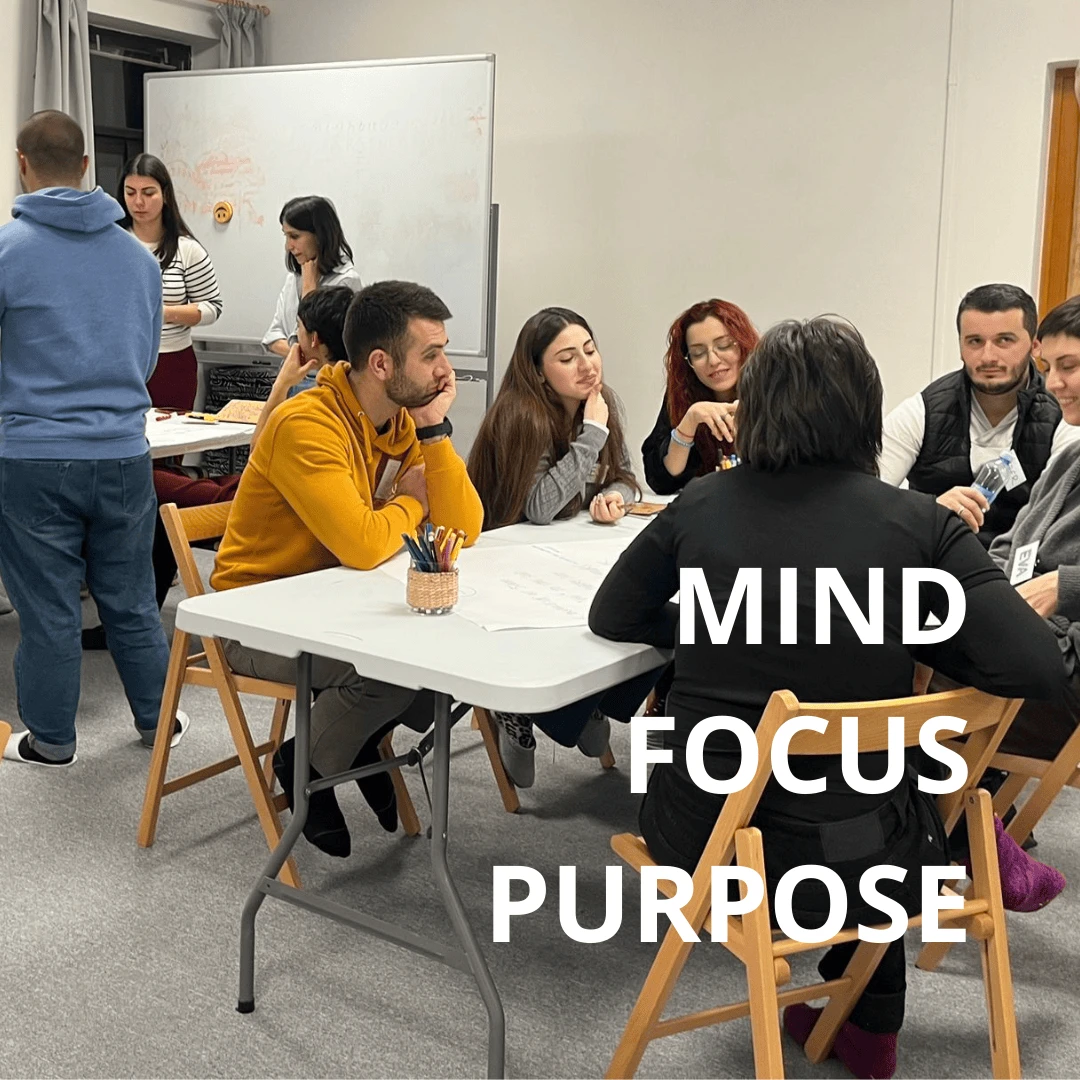
The week began gradually, with participants getting to know one another, establishing shared ground rules, and discussing what had brought each of them to the course and what they hoped to gain from it. Only on this foundation of trust did the program gradually delve into deeper topics: personal values, emotional patterns, and how our inner mindset influences the way we communicate and collaborate with others.
A large part of the program took the form of experiential learning—that is, learning through direct experience and its subsequent reflection. Participants practiced active listening techniques, empathetic communication, and the art of giving and receiving feedback in a way that opens dialogue rather than closing it. The program also included simulations and role-play activities focused on conflict transformation, which helped participants find constructive solutions even in challenging situations.
Gradually, the basics of coaching as such were incorporated into the program: working with questions that do not provide ready-made answers, but help others find their own path. Each day concluded with a circle sharing session and an integrative reflection that helped connect the experience to the participants’ daily practice, whether they work with youth, lead teams, or are themselves going through a professional transition.
Participants took away more than just a set of new tools from the course. Many described leaving with greater self-confidence, more clearly defined values, and concrete inspiration on how to integrate coaching and reflective approaches into their work and daily lives. And perhaps just as important: they left knowing that they are not alone in an international community of people dedicated to similar questions.